Benjamin Graham Formula & Graham Number Calculator
Calculate fair equity value using Benjamin Graham’s 1974 bond-yield adjusted growth equation and the conservative Graham Number asset-earnings ceiling.
Find inputs with free data (Finviz)
Find the values below on the Finviz quote page and enter them in the calculator.
| Calculator input | Where on Finviz |
|---|---|
| EPS | Snapshot > EPS (ttm) |
| BVPS | Snapshot > Book/sh |
| Growth g | Snapshot > EPS next 5Y (cap at 20%) |
| Bond yield Y | US 10Y Treasury (e.g., FRED) or default 4.4% |
| Current price | Snapshot table > Price |
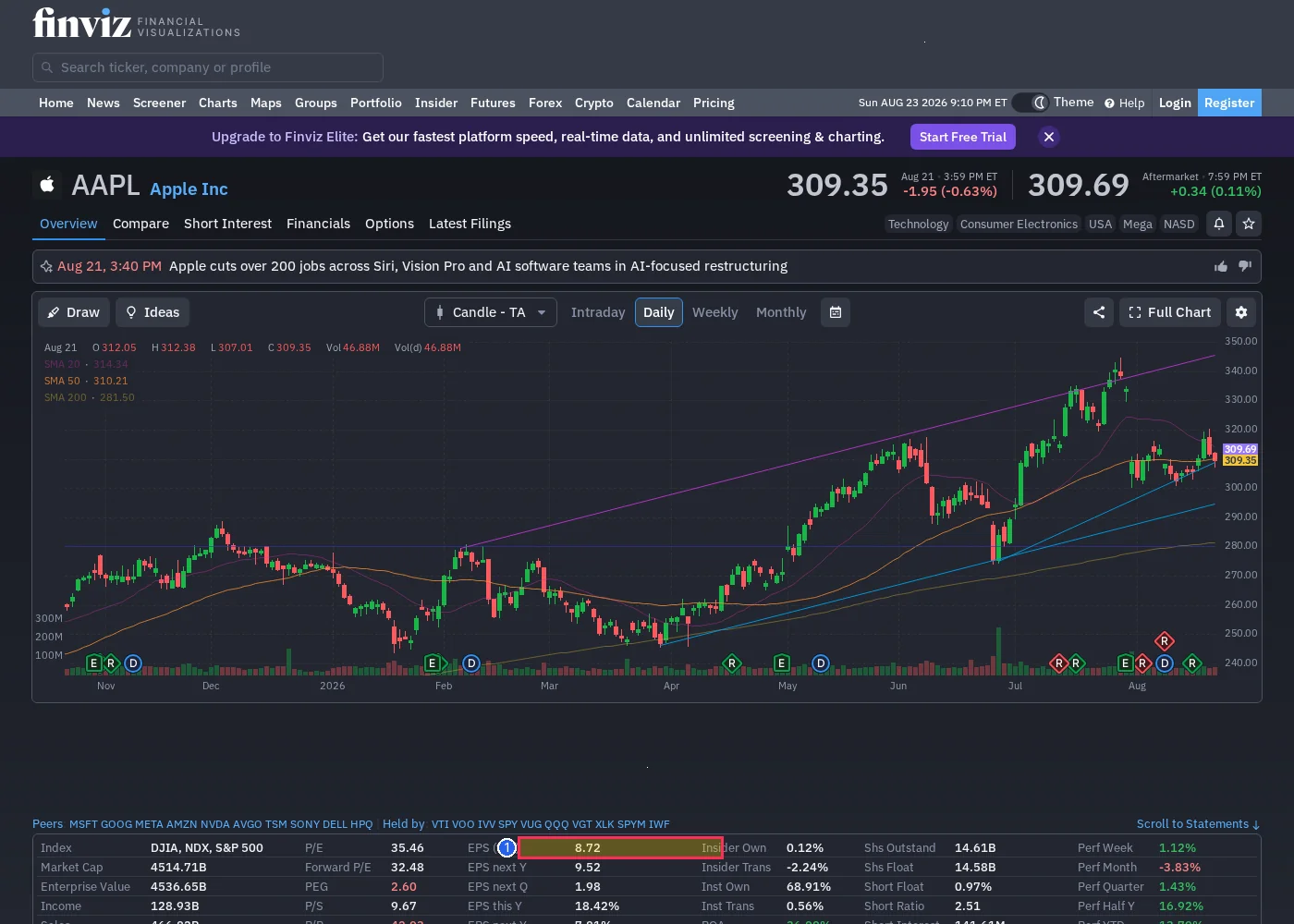
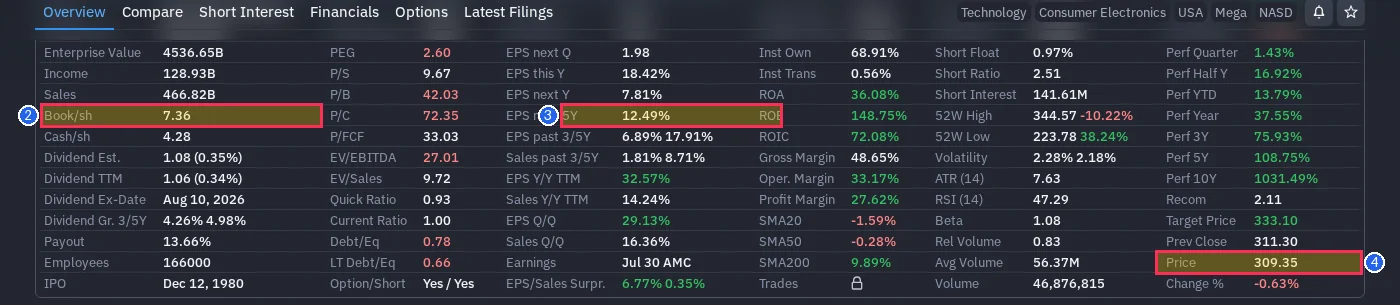
Financial statement figures are under the Income Statement / Balance Sheet / Cash Flow tabs above the snapshot table; set Timeframe to Annual. Click an image to enlarge.
Theoretical Foundation & Equation
Graham established an intrinsic value benchmark anchored on zero-growth P/E of 8.5 plus twice the expected growth rate (8.5 + 2g), adjusted by the prevailing high-grade corporate bond yield (4.4 / Y). For defensive investors, the Graham Number defines the maximum purchase price.
| Symbol | Variable Name | Description | Filing Source Guide |
|---|---|---|---|
| EPS | Earnings Per Share | Trailing Twelve Months normalized diluted EPS | 10-K Income Statement: Diluted EPS |
| BVPS | Book Value Per Share | Tangible common stockholders equity divided by diluted share count | 10-K Balance Sheet: Common Equity / Shares |
| g | Expected Annual Growth Rate | Expected 7-10 year annual earnings growth percentage | Historical 5-year CAGR or conservative industry projection |
| Y | Current High-Grade Bond Yield | Current yield on AAA Corporate Bonds or 10-Year Treasury (%) | Moody’s AAA Corporate Bond Yield or US 10Y Yield (Graham baseline: 4.4%) |
Step-by-Step Worked Example
Standard defensive value company fitting Graham’s criteria.
Graham 1974 formula suggests an intrinsic value of $90.00, while the asset-backed Graham Number establishes a conservative defensive buy threshold of $56.12.
Suitability Checklist & Limitations
- •Stable profitable industrial, manufacturing, and consumer staples companies
- •Evaluating interest rate impacts on equity valuation multiples
- •Defensive value investors seeking a hard margin of safety
- •Unprofitable firms (negative EPS) or negative equity companies
- •High-growth tech companies with growth rates exceeding 20%
For dynamic growth stocks, Peter Lynch’s PEG model provides better calibration.
Frequently Asked Questions
The Intelligent Investor (1973 Revised Edition) / Security Analysis (1934)
View Source / Filing Reference- The formula is a heuristic based on historical market conditions and does not substitute for detailed balance sheet analysis.