NCAV (Net-Net Liquidation) Calculator
NCAV measures the liquidation floor by taking liquid current assets, subtracting all liabilities and preferred claims, and setting long-term fixed assets to zero.
Find inputs with free data (Finviz)
Find the values below on the Finviz quote page and enter them in the calculator.
| Calculator input | Where on Finviz |
|---|---|
| Current assets | Balance Sheet > Total Current Assets |
| Total liabilities | Balance Sheet > Total Liabilities |
| Preferred/minority | Balance Sheet > Preferred Stock + Minority Interest |
| Shares outstanding | Income Statement > Shares Outstanding |
| Current price | Snapshot table > Price |
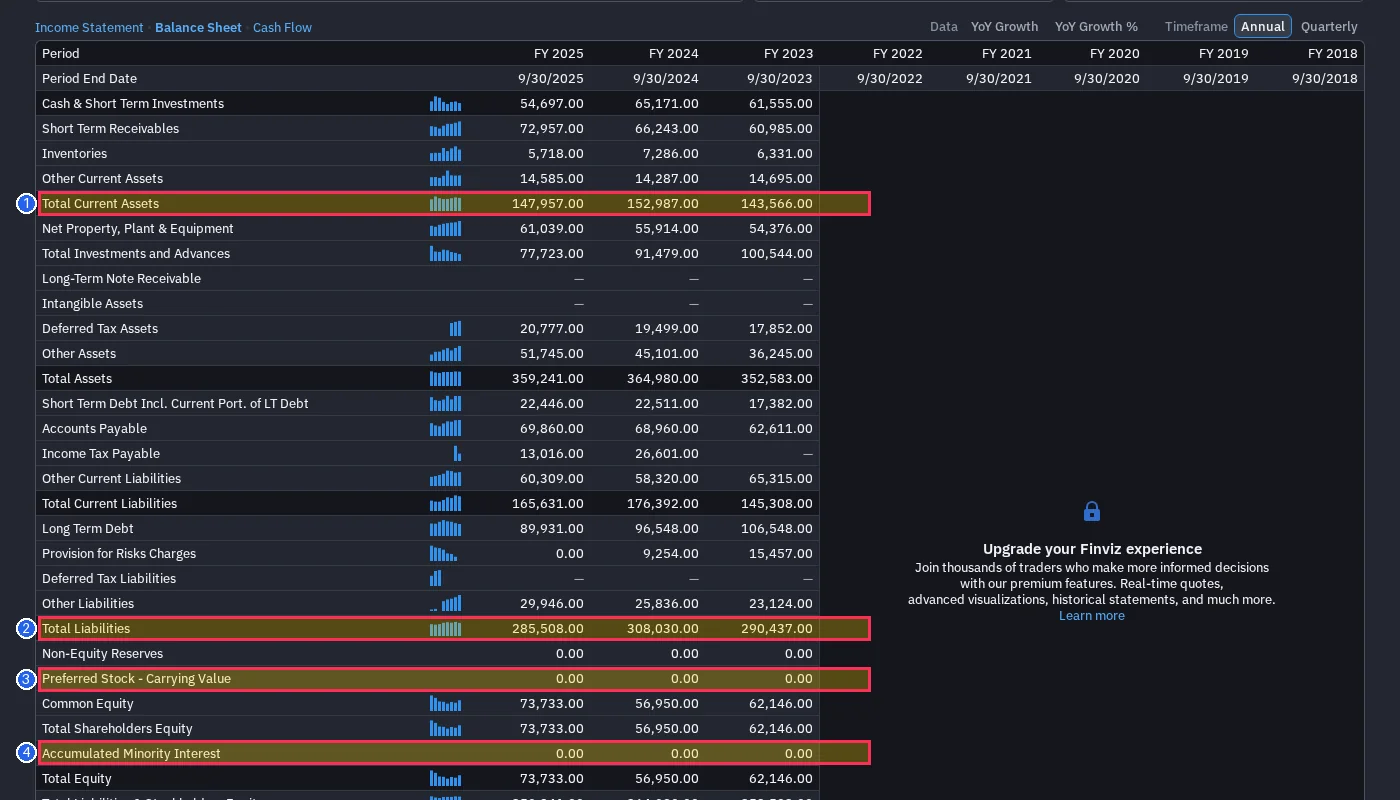
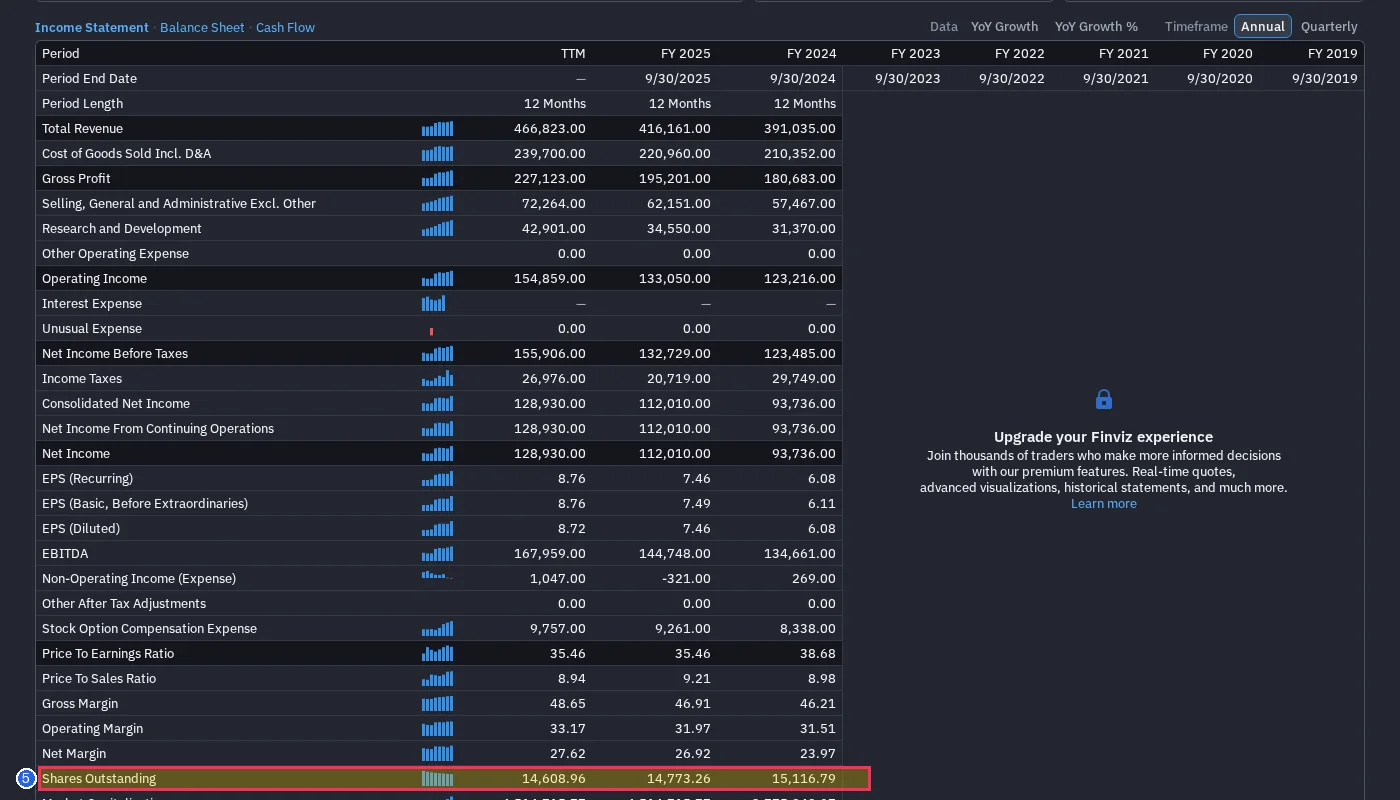
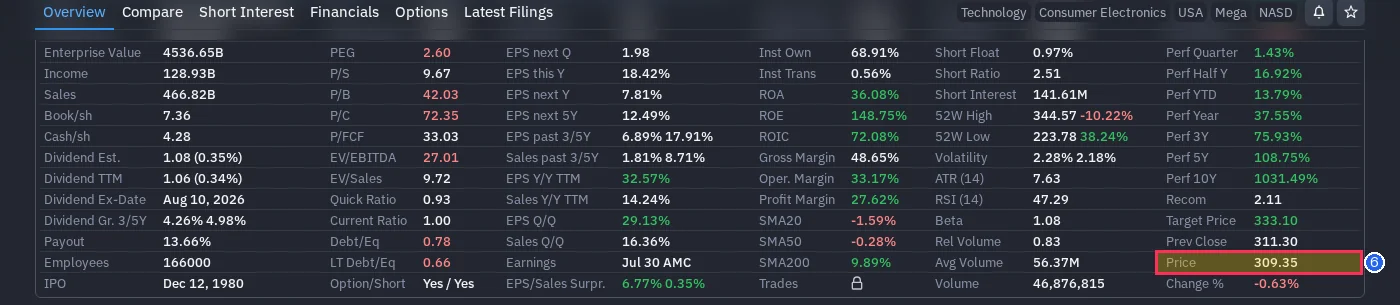
Financial statement figures are under the Income Statement / Balance Sheet / Cash Flow tabs above the snapshot table; set Timeframe to Annual. Click an image to enlarge.
Theoretical Foundation & Equation
The Net-Net method values a business strictly on liquid working capital that could be realized in a rapid orderly wind-down, assigning zero value to property, plant, equipment, or intangibles. Graham recommended purchasing below 66.7% of NCAV.
| Symbol | Variable Name | Description | Filing Source Guide |
|---|---|---|---|
| Current Assets | Total Current Assets | Cash, short-term investments, accounts receivable, and inventory convertible to cash within 1 year | 10-K Balance Sheet: Total Current Assets |
| Total Liabilities | Total Liabilities | All current and long-term liabilities owed to third parties | 10-K Balance Sheet: Total Liabilities |
| Preferred Stock | Preferred Stock & Minority Interest | Senior equity claims prior to common shareholders | 10-K Balance Sheet: Preferred Equity |
Step-by-Step Worked Example
Classic deep-value liquidation benchmark.
NCAV per share is $6.00. Graham’s strict Net-Net entry price threshold is $4.00 or lower.
Suitability Checklist & Limitations
- •Cash-rich micro-caps and neglected asset-heavy companies trading below net working capital
- •Deep value investors seeking an absolute liquidation margin of safety
- •Companies with negative net current assets (Current Assets < Total Liabilities)
- •Unprofitable cash-burning firms where liquid assets erode rapidly each quarter
For profitable operating businesses, the Residual Income Model (S-RIM) is better suited.
Frequently Asked Questions
Security Analysis: Principles and Technique (1934)
View Source / Filing Reference- Always verify that inventory and receivables do not have high obsolescence or write-down risks.